

KP’s All-Time Favorite Herbs for Men
There are three herbs that every man should consider taking for overall health and wellness — ginseng, ashwagandha, and hawthorn.
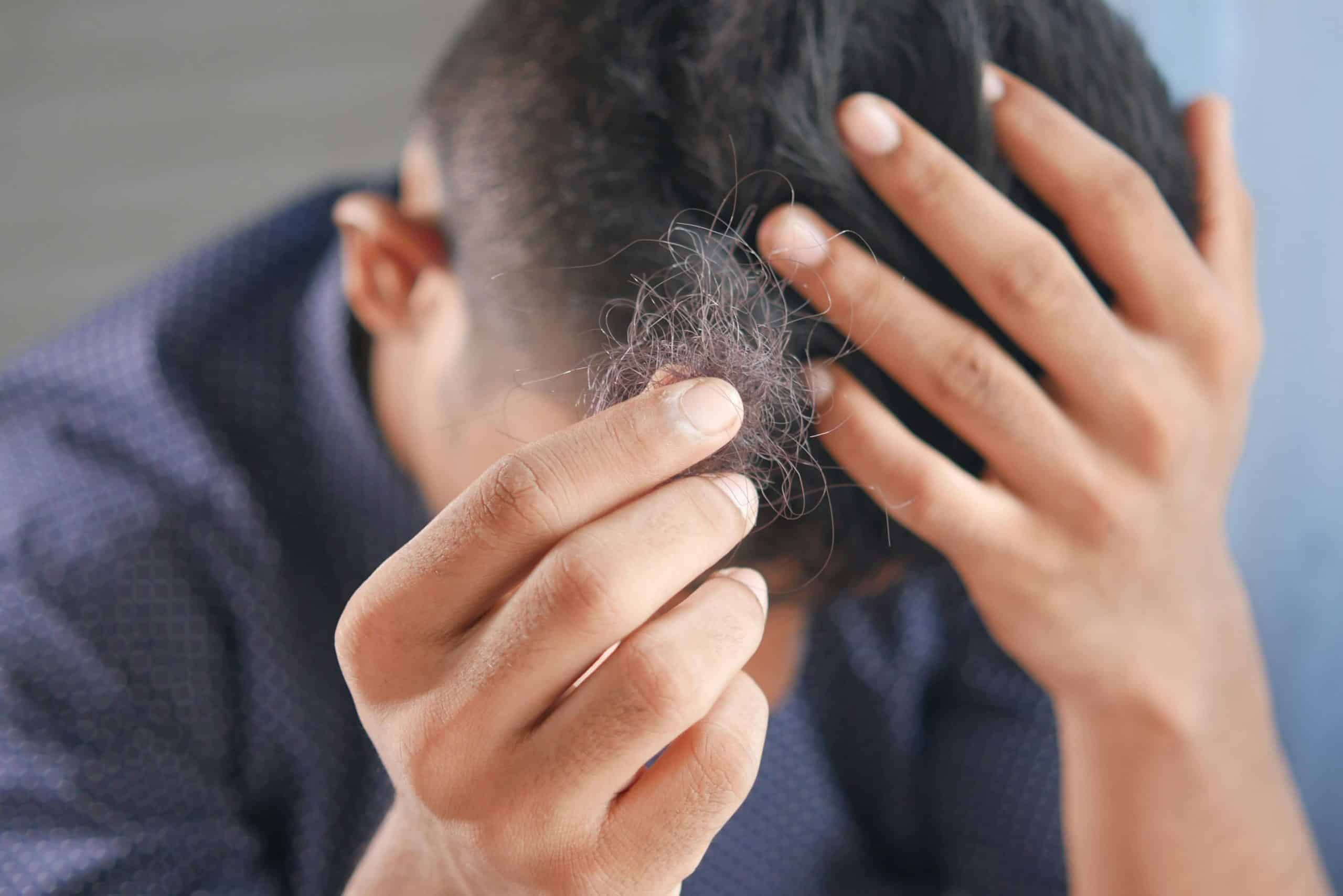
While hair does serve some minor direct physiological functions, it mainly impacts one’s sense of self esteem. Androgenetic alopecia, the medical term for male pattern baldness (MPB) and female pattern baldness (FPB), is the most common cause of hair loss. For men, MPB begins to show between the ages of 20 and 30 years old, and starts as an m-shaped recession of hair that eventually expands across the head.
FPB presents itself as a growing pattern of baldness along where a woman parts her hair, referred to as the Ludwig pattern. While 50% of women experience FPB by age 80, nearly 80% of men experience MPB by the same age.
In male pattern baldness, hair loss begins with the breakdown of the hair growth. As the growth process begins to weaken for each strand of hair, the hair follicle shrinks, and eventually produces finer strands until eventually no new hair grows, thus resulting in total hair loss.
From the Ayurvedic perspective, the scalp is a subproduct (tissue) of the bone and often reflects the underlying health of the body’s bones. In Ayurveda, the main cause of baldness is pitta accumulation. This accumulation of excess heat in the scalp requires cooling remedies and diet. Secondary causes of baldness include an imbalance in the organ metabolism of bone and marrow tissues, excess usage of astringent medicines, and scalp tissue infection.
Though tackling baldness seems a daunting undertaking, especially if one seeks to regain confidence in personal appearance, there are a multitude of holistic treatments, including herbal remedies and natural supplements, at your disposal. One should consider taking a holistic and natural approach in order to begin treating androgenetic alopecia. This approach to enhancing hair growth and reducing hair loss often requires the combined use of multiple herbal remedies and other natural supplements.
In Ayurvedic medicine, to treat inflammation, pitta (heat) must be released from the small intestine. Instead of cooling down the whole body, the small intestine can be targeted. Avipattikar churna is a powder containing ginger, pipali, triphala, musta, black salt, vidanga, cardamom, cinnamon, and trivrit root bark (the active ingredient) that is a reduces heat in the body.
This herbal remedy releases pitta from the small intestine by acting as a laxative. The recommended dose is 3-5 g twice a day with milk or lukewarm water.
Because hair is an upadhatu (subtissue) of bone in the Ayurvedicsystem, taking calcium supplements is highly recommended to treat hair loss. You can either take modern calcium supplements or shankh (powdered conch shell).
One natural remedy for male pattern baldness is saw palmetto berry, a fruit native to the southeastern United States that aids in the prevention of hair loss. This natural remedy may act by reducing the production of dihydrotestosterone (DHT), a hormone that can overstimulate hair follicles, causing them to become thinner and smaller over time. The recommended dose is about 10-15 grams or 2-3 tablespoons per day, in either a power or capsule form. A study on assessing the effect of saw palmetto berry on treating mild to moderate hair loss saw some positive effect. In this study, researchers Prager, et al, found that in a five month period, hair growth improved in 60% of the men studied, between the ages of 23 to 64. However, it is important to note that while this study suggests that saw palmetto berry can significantly improve hair growth, the study included a mere 19 people, splitting half between the control group and the placebo group.
Pygeum bark, an herbal supplement derived from a tree native to North Africa, also reduces the production of DHT. While this herbal remedy is primarily used to treat swollen prostate glands, some believe its ability to block DHT may also reduce hair loss in men.
Eleuthero, also referred to as Siberian ginseng, is an adaptogen that is commonly used to treat thyroid problems. This herb is considered a ‘super herb’ because it creates support in multiple health conditions: stress adaptation, blood sugar stabilization, increased immune support, and hair growth.
Amino acids are essential for hair growth and hair health. Non-herbal supplements that can enhance the digestion of protein in the body include a wide variety of easily available products.
Another common cause of hair loss is iron deficiency, the most common mineral deficiency in the world. However, it is not as common in North America so it is recommended to test your iron levels before increasing your intake of iron supplements. Iron glycinate is a dietary supplement that aids in increasing iron levels without causing digestive issues. The recommended dose is 100 mg per day to normalize iron levels, and 30 mg to stabilize those levels.
Zinc is a mineral that is involved in the production of keratin, a protein that gives hair structure and resistance. Because a zinc deficiency can disrupt the nutrients needed for hair growth, resulting in weaker hair follicles, increased shedding, and thinning hair, it is a recommended supplement to aid in hair growth. The recommended daily dose for men is 9 mg and 7 mg for women. Unless monitored by a health practitioner, it is not recommended to take more than 25 mg per day as that can result in digestive side effects.
Biotin, also called vitamin H, is a natural B vitamin that assists in boosting and maintaining keratin levels. Though it is debatable how significantly biotin affects keratin levels, a study analyzing hair loss in women suggests that biotin can increase hair growth and prevent hair loss. It is recommended to take 30 mcg (micrograms) daily.
Methylsulfonylmethane (MSM) is a naturally occurring chemical found in most green plants. Research shows that MSM can increase hair growth and reduce hair loss in six weeks as it boosts keratin production. According to a study assessing the effectiveness of MSM on keratin, this supplement can aid in the promotion of hair growth by strengthening the sulfur bonds in the hair shaft.
Though some topicals can assist in hair regrowth, it is recommended to pair topical treatments with an herbal remedy or natural supplement to see results. A primary topical treatment used for hair regrowth is crudoleum. Crudoleum is crude petroleum (oil) that is applied to the scalp for one hour, then washed off to remove.
Watch my workshop on hair loss and learn more about the herbs and supplements discussed in this article, their role in hair restoration, and more about lifestyle changes and practices you can implement to promote hair regrowth.
There are three herbs that every man should consider taking for overall health and wellness — ginseng, ashwagandha, and hawthorn.

There’s a common axiom among doctors and health care practitioners —to live a long, healthy life, don’t fall and break